Quick Summary
Attic insulation is specified by R-value, not thickness, and the U.S. Department of Energy recommends R49 to R60 for an uninsulated attic in the Pacific Northwest, or R38 to R49 when a few inches are already in place. Depending on the material, that works out to about 13 to 17 inches of cellulose and 17 to 27 inches of loose-fill fiberglass. Compression, air leaks, and blocked vents can cancel out the numbers on paper, so an in-person assessment tells you more than a ruler does.
The question of how thick should attic insulation be does not have a single answer in inches, because the target is an R-value and each material needs a different depth to reach it. A layer that looks generous in one product can fall well short in another, and a home in Bellingham, where winters are damp and the heating season is long, loses a lot of comfort and energy when the attic insulation layer is thin or uneven.
The numbers below come from the U.S. Department of Energy, and they show what the recommended R-values look like in real depth for the materials found in most attics. They also explain why our team at Fly Guys Roofing prefers to assess an attic in person before recommending a thickness.
The Recommended R-Value for the Pacific Northwest
The Department of Energy publishes insulation recommendations by climate zone, and for an uninsulated attic in the marine and cooler zones that cover western Washington the range is R49 to R60. When an attic already holds three to four inches of insulation, the recommended total drops to R38 to R49, because the existing layer contributes part of the target.
The same guidance recommends R30 for an uninsulated floor over a crawlspace in these zones, which is a reminder that the attic is only one part of the thermal boundary of a home. The agency estimates that adding insulation to attics, floors, and crawlspaces while sealing air leaks can cut heating and cooling costs by up to 15 percent, which is why the target is worth hitting rather than approximating.
What R49 and R60 Look Like in Inches of Attic Insulation
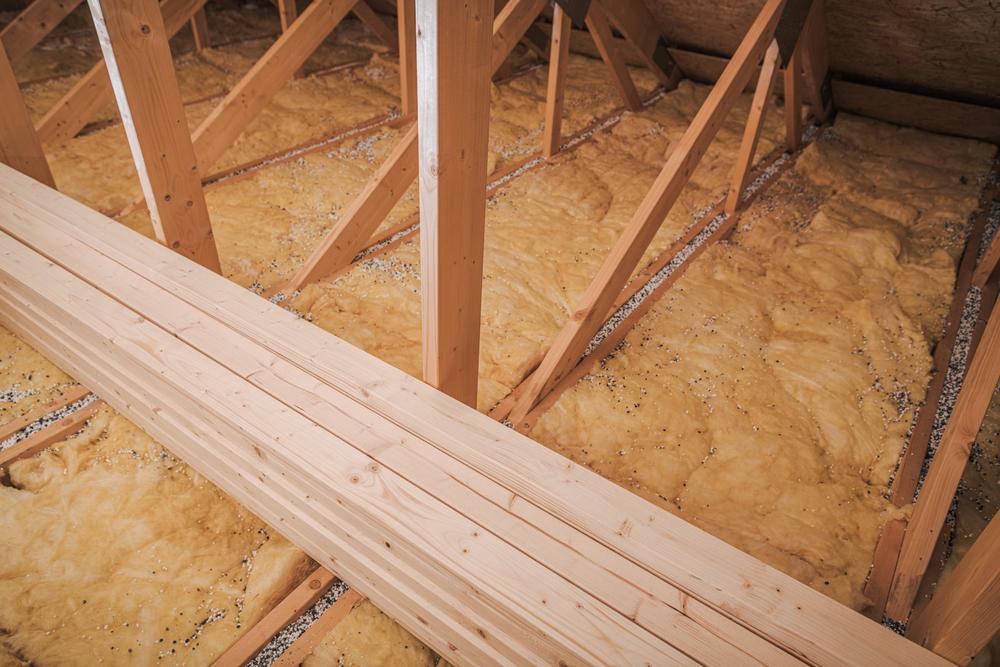
R-value per inch varies by material, so the same target takes very different depths. Cellulose, rated at about 3.6 to 3.8 per inch, reaches R49 at roughly 13 to 14 inches and R60 at roughly 16 to 17 inches. Fiberglass batts, at 2.9 to 3.8 per inch, land in the range of 13 to 17 inches for R49 and 16 to 21 inches for R60, depending on the product.
Loose-fill fiberglass sits lower at 2.2 to 2.9 per inch, so R49 takes about 17 to 22 inches and R60 takes about 21 to 27 inches. Materials with a higher rating per inch, such as closed-cell spray foam at R6 or more, reach the same targets in a few inches, which is why they suit vaulted ceilings and tight rafter bays where depth is limited.
Why the Number on the Package Is Not the Whole Story
Insulation only delivers its rated R-value when it is at its designed density and covers the attic floor without gaps. Batts that have been compressed under stored boxes, a layer that has settled over the years, and thin spots around chimneys, hatches, and wiring all lower the real performance below the nominal figure, and a ruler held up to the surface cannot detect any of them.
Air movement is the other variable. Warm air from the living space leaks into the attic through light fixtures, bath fan housings, and gaps around plumbing, and it carries moisture with it, so a home with deep insulation and open air leaks can still run cold and damp. Sealing those paths before adding material is part of the work, and our insulation service includes air sealing and weatherproofing for that reason.
Depth Has Limits Set by the Roof
A deep layer is only useful if the attic can still breathe. Insulation pushed into the eaves can block the soffit vents that feed air to the roof, and that trapped humidity condenses against the decking over a wet Whatcom County winter, which is how moisture damage and mold begin. The ventilation path has to stay open at the perimeter even when the middle of the attic is piled deep.
This is where a roofing contractor sees what a general insulation visit can miss. The condition of the decking, the placement of vents, and the age of the roof covering all affect how much insulation the attic can safely hold, and adding a thick layer over an existing leak only hides the problem until the ceiling shows it. A leak has to be traced from inside the attic to its source, and one customer, TK, described a crew that “crawled around in my attic to find the issue” in a 5-star review. If a roof repair is needed, it belongs ahead of the insulation, not after it, and when the covering is worn out across the whole roof, a roof replacement comes first for the same reason.
How We Settle on the Right Attic Insulation Thickness
Our team starts by assessing what is already in the attic, including the type, the depth, the condition, and whether it is dry and clean enough to build on. Damp, contaminated, or pest-damaged material is removed and replaced, as Steve noted in a 5-star review when the crew “replaced old insulation with new”, while a sound but thin layer can often be topped up to the target, and we recommend a material and depth based on what we find.
We can assess the attic and crawlspace together, so the recommendation fits the whole house instead of one space. Doing the work together also keeps the schedule short, and Cameron wrote in a 5-star review that his full roof and insulation replacement was “complete in just 1 day”. You can read more about our attic and crawlspace insulation service, which covers homes anywhere in Whatcom or San Juan County.
FAQs
How much insulation will I need for my attic?
Reaching R49 to R60 in an uninsulated attic takes a different depth for each material, so there is no single number of inches. Cellulose needs about 13 to 17 inches, batts about 13 to 21, and loose-fill fiberglass about 17 to 27, with spray foam getting there in far less. We measure the layer already in your attic and recommend the depth that closes the gap.
Can loft insulation be too thick?
Yes, but only in specific ways, because thickness alone is rarely the issue. The trouble starts when the layer covers soffit vents, presses on the deck at the eaves, or buries a roof leak. Keeping air paths open and repairing the roof first prevents all three, and an assessment of the attic and roof together confirms it.
What type of insulation is best for an attic?
It depends on the attic, since materials differ in depth and in where they work best. Blown cellulose and loose-fill fiberglass suit an open floor, while closed-cell spray foam fits vaulted ceilings and tight rafter bays at a fraction of the depth. Which one wins comes down to what we find during the assessment.
Is my old attic insulation still good enough?
Not necessarily, because a layer that looks full can still underperform. Settling, moisture, pest damage, or a total below the recommended R-value each reduce what it delivers, which is why depth, condition, and moisture need checking in person. We will say whether it can be topped up or needs replacing.
Does attic insulation thickness matter for crawlspaces too?
Yes, the crawlspace has its own R-value goal, with the Department of Energy recommending R30 for an uninsulated floor in the Pacific Northwest. Moisture control matters down there too, so we pair insulation with vapor barriers against ground moisture. Assessing the attic and crawlspace as one job covers the whole house.
Call (360) 317-5027 to request an estimate with Fly Guys Roofing.